






CBX Zugg Pin Ball-end Cable System
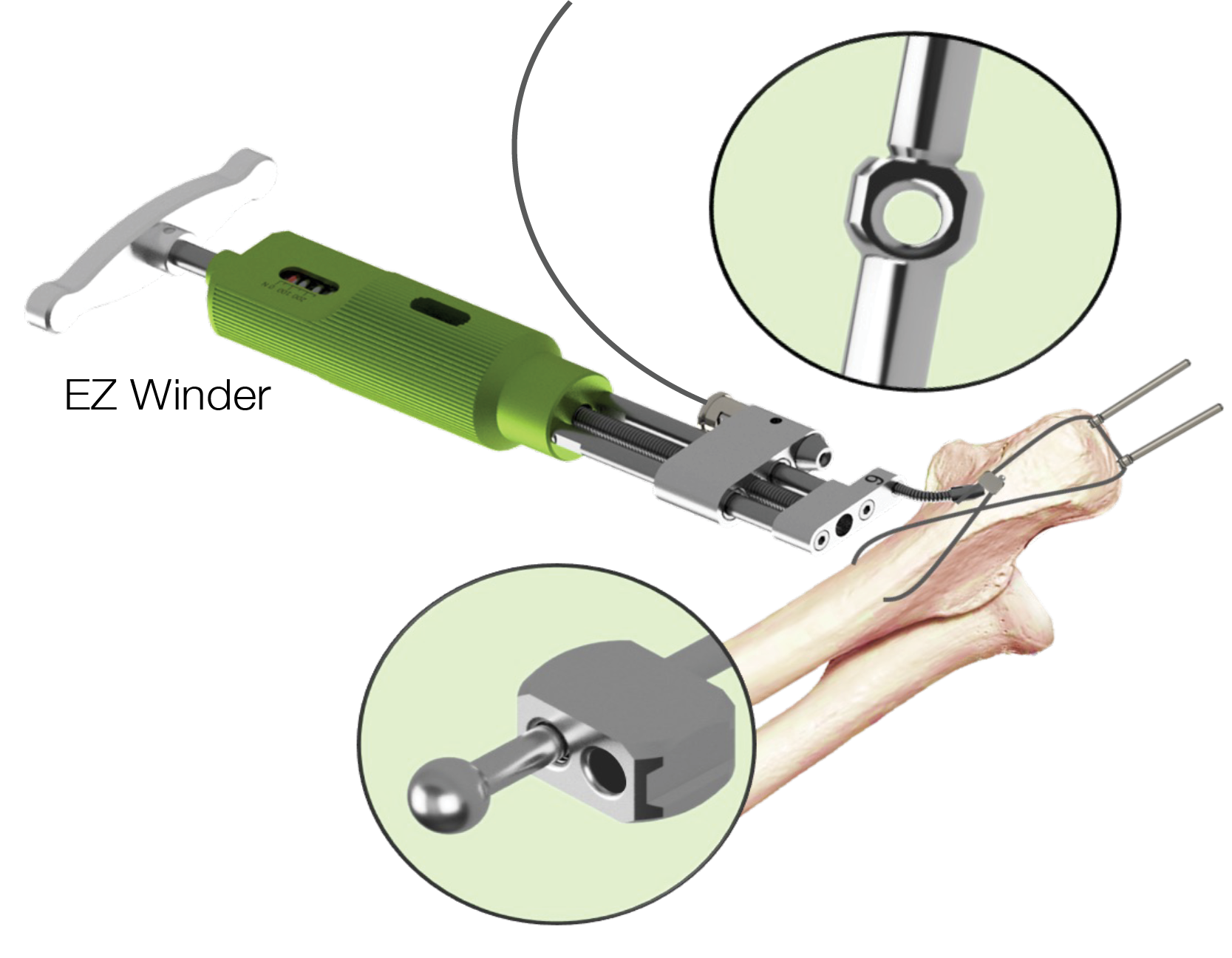
This pin system for the Zugg method was developed to reduce postoperative pain and to enable a simplified surgical procedure even when pin spacing is narrow.
Image
Key Points
・The ring portion of the Zugg Pin has been designed to be as compact as possible.
・A needle is attached to one end of the cable to facilitate easy passage through the bone tunnel.
・The other end of the cable features a ball end.
・The flexibility of the cable allows for even tensioning, enabling uniform application of tension with the EZ Winder.
| Product Name | Specification | Model Number | |
| Zugg Pin | 1.8mm×50mm | CBX04-SP18050 | 1 piece / Sterile |
| Zugg Pin | 1.8mm×70mm | CBX04-SP18070 | 1 piece / Sterile |
| Ball-end Cable | 1.0mm×600mm | CBX04-C10600B | 1 set / Sterile |
Material: Stainless Steel Model:CBX Zugg Pin Approval Number:30700BZX00032000
Surgical Procedure
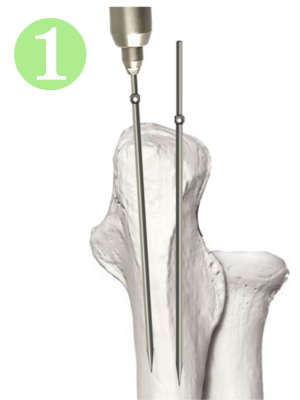
Hold the Zugg Pin with a pin collet (grip diameter: 1.6 mm) or a Jacobs chuck, and insert it toward the intramedullary canal of the ulna.
*Caution: Excessive stress applied to the Zugg Pin may result in deformation or breakage, particularly at the notch in the gripping section.
*Caution: If the ring portion of the Zugg Pin is positioned too close to the bone, passage of the cable may become difficult.
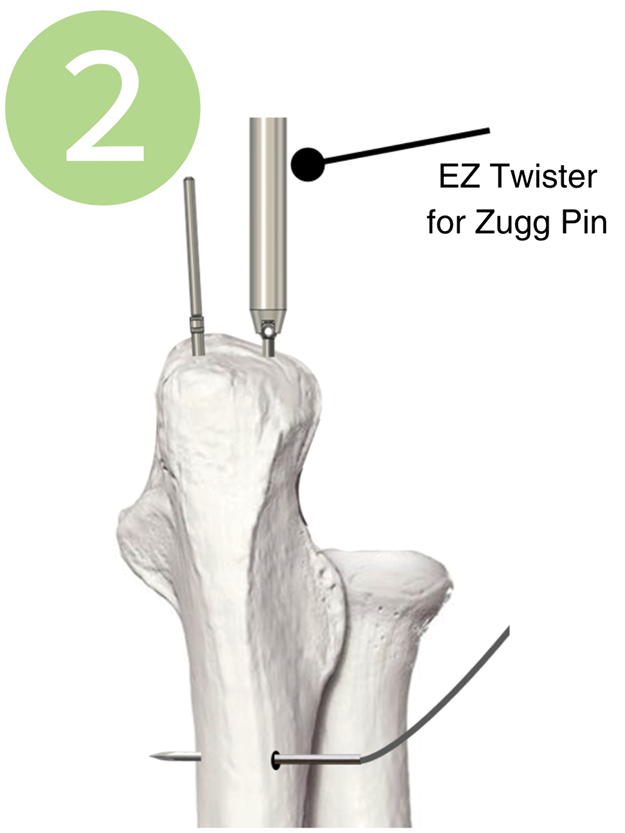
Create a bone tunnel using a 1.8 mm Kirschner wire.
(The diameter of the Helios Cable is 1.0 mm.)
Pass the needle tip of the Helios Cable through the bone tunnel.
Then, using the EZ Twister for Zugg Pins, align the holes in the ring portions of the two Zugg Pins to face each other.
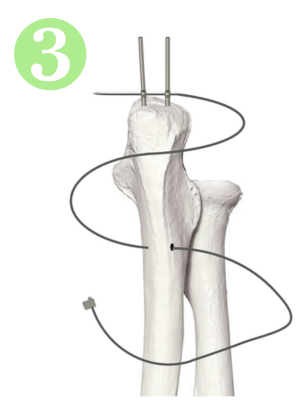
Pass the Helios Cable through the ring portion of the Zugg Pin.
*Caution: Rough handling of the cable may result in wire strand breakage, deformation, or kinking. Please handle with care.
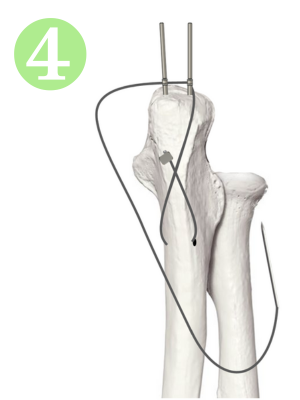
Position the sleeve attached to the opposite end of the Helios Cable on the bone surface so that the cable forms a figure-of-eight configuration.
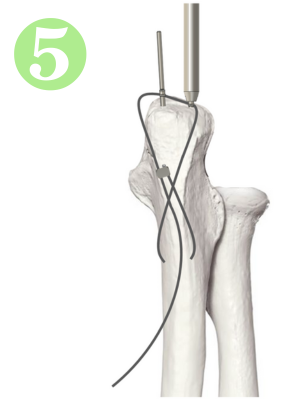
After passing the Helios Cable through the sleeve, drive the Zugg Pin into the triceps using the EZ Twister for Zugg Pins.
*Caution: Excessive insertion of the Zugg Pin may prevent proper tension from being transmitted to the Helios Cable.
*Caution: If the ring portion is positioned too far from the bone end, applying tension may cause deformation of the pin.
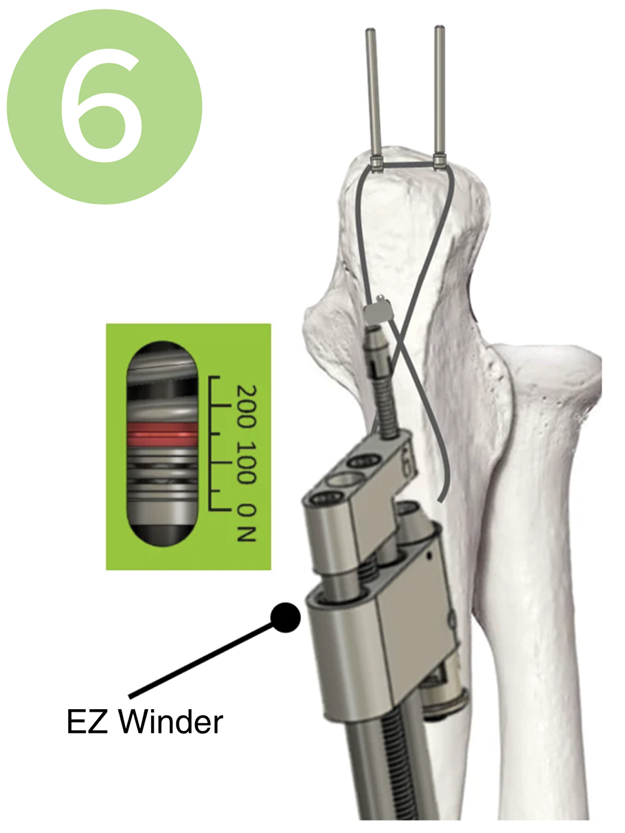
With the elbow in extension, apply approximately 150 N of tension to the Helios Cable using the EZ Winder.
Perform flexion and extension of the elbow joint. If the tension indicated on the EZ Winder has decreased, reapply tension as needed.
*Caution: Do not forcibly perform elbow flexion and extension if the bone fragment is unstable.
*Caution: Excessive tension may cause cable damage or, in osteoporotic bone, secondary fracture.
*Caution: Insufficient tension may result in cable loosening and inadequate fixation. Additionally, uneven tension may occur due to catching at the cable crossover point.
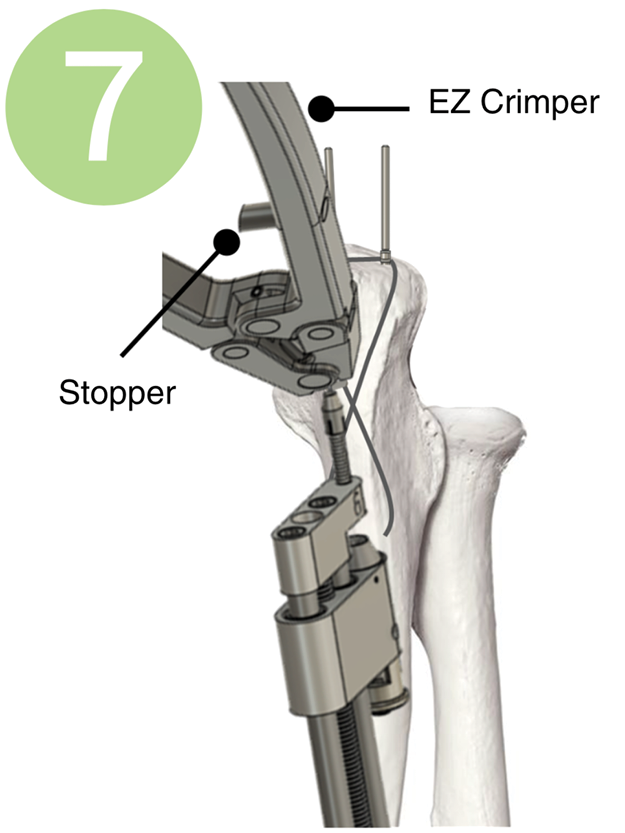
Crimp the sleeve with the EZ Crimper until it contacts the stopper.
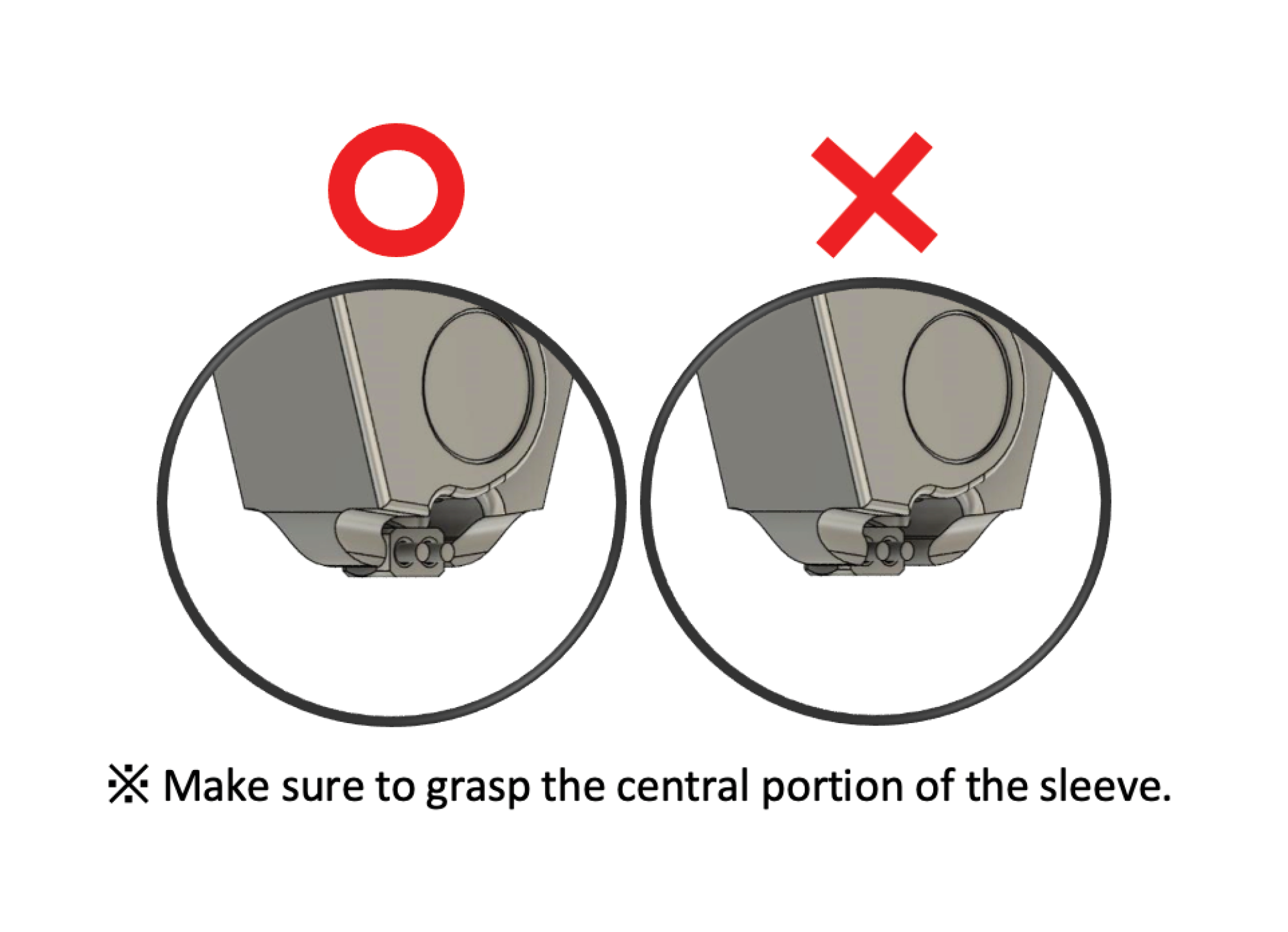
Crimp the sleeve with the EZ Crimper until it contacts the stopper.
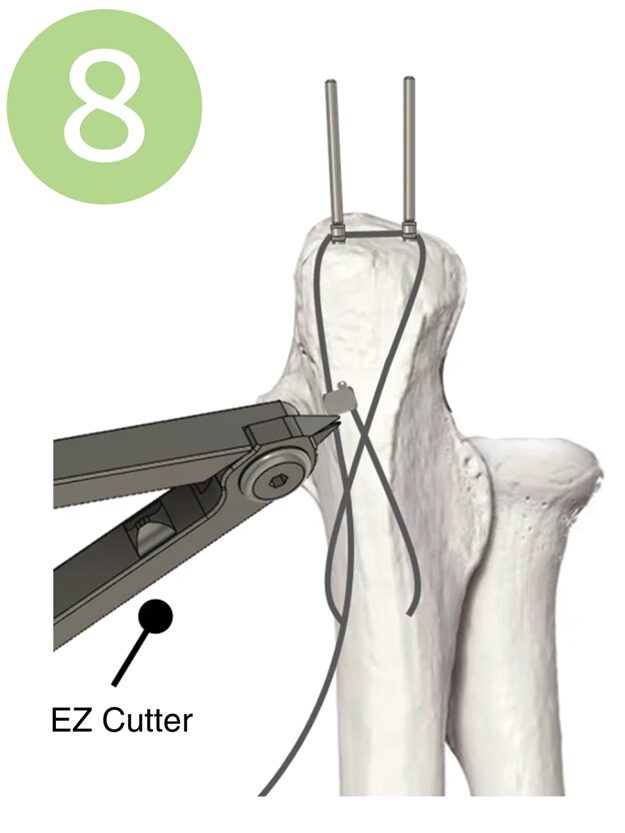
Cut the excess Helios Cable using the EZ Cutter.
*Caution: Take care not to accidentally cut the tensioned side of the cable.
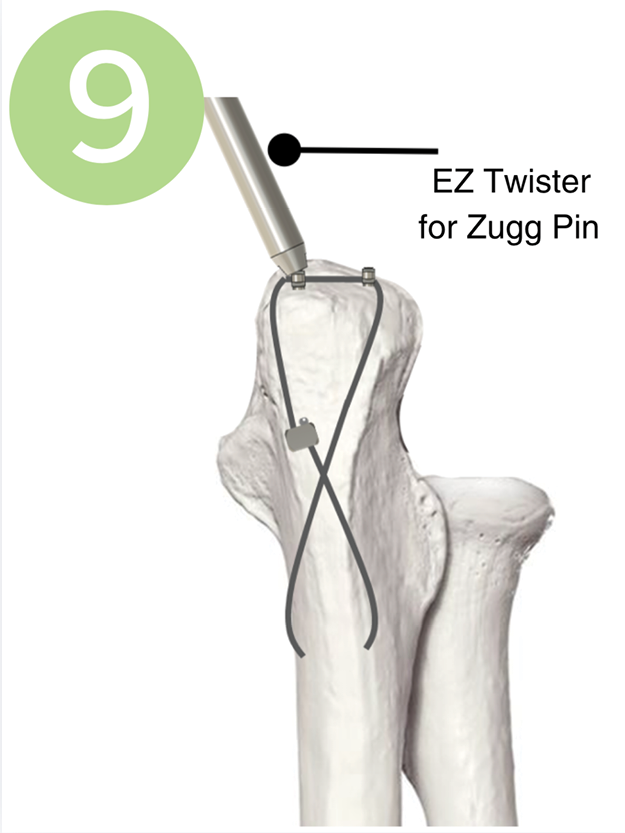
Finally, using the EZ Twister for Zugg Pins, bend the gripping portion of theZugg Pin medially and laterally to break it off.
*Caution: If it is bent in the anterior–posterior direction, the Zugg Pin may bend dorsally at the base of the ring, which may result in loosening of the cable.
For detailed information about our products or any inquiries, please contact us via the “Contact Us ” page.
A representative will get back to you shortly.
For more information about the Himawari Method Surgical Instruments (Helios Locking Pin Sleeve System), please click here.